Choosing the Right Piano
What to look for, what to spend, and what to check before you buy.
Consider these four things
Choosing the right piano for yourself depends on a few things: your budget, the amount of space you have, consideration for the people you live with and your neighbours, and your own preference for an acoustic or a digital instrument.
Start with the number of keys
The first thing I would consider is how many keys the instrument should have. A standard piano keyboard has 88 keys, and this is what I would recommend for most people, even beginners.
Where it is going to live
Next, think about the space the instrument will occupy.
Digital
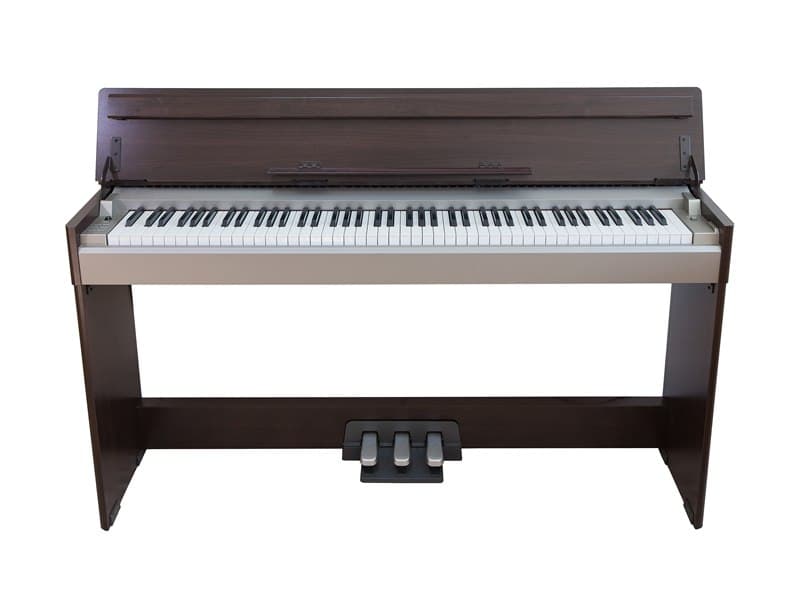
Takes the least weight and space, and can be quite portable.
Upright or Hybrid
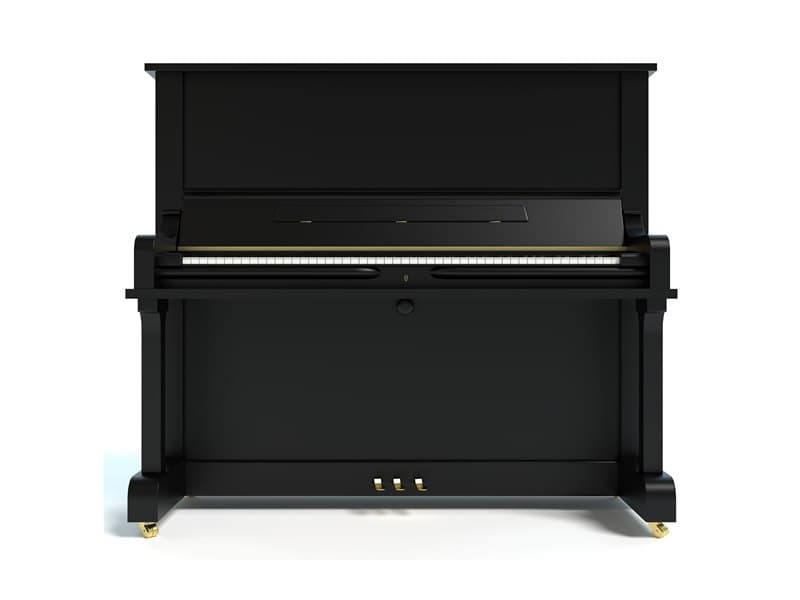
Upright acoustics, and hybrid digital/acoustic instruments, are usually placed next to a wall.
Grand
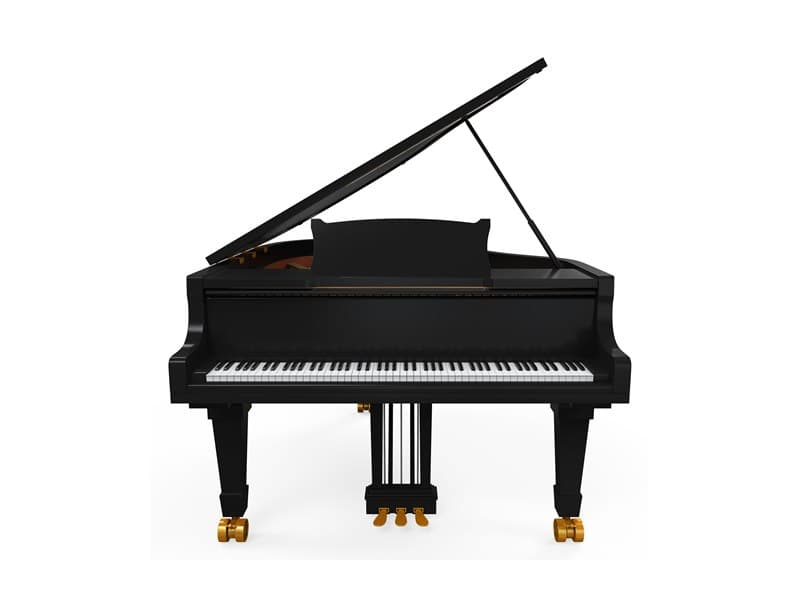
A baby grand or a grand piano will need its own dedicated space.
Wherever it goes, leave it set up and ready to play. An instrument that has to be carried out and assembled first gets played far less often than one you can sit down at for ten minutes on the way past. That matters more to how quickly you improve than most of the decisions above.
Not all digital pianos work the same way
Two digital pianos at the same price can produce their sound in completely different ways, and it is rarely made obvious on the box.
Sampling is where a real piano has been recorded at different velocity levels across its range. The instrument plays back those recordings, usually combined with digital effects and modelling of the soundboard.
Physical modelling generates the sound entirely from a mathematical model of how a piano behaves — nothing is played back, because nothing was recorded.
My own preference is for physically modelled engines. They are far more responsive to differences in touch, which matters more the longer you play.
Digital pianos also usually include more than one piano sound. The presets might imitate a grand, an upright, a deliberately out-of-tune piano, or other instruments entirely — electric pianos and organs among them.
What I use
For online lessons I use a Kawai VPC1 as the controller keyboard, with Pianoteq as the sound engine — a physically modelled one, for the reasons above.
I also have a Yamaha GB1 baby grand, which I use for practising and for playing for pleasure.
Speakers and headphones
Most digital pianos designed for home use have a built-in speaker system. Digital pianos designed for stage use may not, and require an external monitor speaker, headphones, or both.
Practising with headphones can be useful when you don't want to disturb others, but I would recommend using speakers when possible.
What to spend
Pianos of all kinds vary quite a lot in price. An acceptable digital piano starts at around £200; high-end models can cost thousands.
Be realistic. Somebody who is just starting out does not need a full-sized concert grand piano. They need an instrument that is reliable and will serve them well over the next few years, or even decades, of learning and playing.
Tone, once you know what you like
Experienced players usually develop a preference for a particular kind of tone. Some pianos are renowned for a warm, dark sound; others for a clear, brighter one.
This is highly subjective, and depends entirely on personal preference. There is no better or worse here — only what you enjoy playing. It is also not something to worry about at the start: the preference tends to arrive on its own, once you have played enough instruments to notice the difference.
Looking after an acoustic
An acoustic piano needs its environment considered. They are best placed somewhere the humidity and heat stay fairly consistent.
Large or sudden changes cause problems: the tuning drifts, and in time the delicate wooden soundboard can be damaged. A spot away from radiators, direct sun and draughty doorways is worth more than a spot that merely looks right.
There is an ongoing cost to that, too. An acoustic needs regular tuning and occasional technical work. A digital instrument needs almost nothing: clean it regularly with a damp cloth and it will keep looking new and working well.
Places to look
Online reviews are a good place to start. They will tell you what an instrument has, what it is made of and what other people think of it — useful for narrowing a shortlist down to a few worth seeing.
What they cannot tell you is what an instrument is actually like to play. That only really comes from sitting down at it.
So whatever you are buying — digital or acoustic, new or second-hand — I would always recommend visiting a physical shop, or going to see a second-hand instrument in person.
The more you are spending, the more that matters. A £200 digital bought unseen is a small risk; a four-figure acoustic is not.
This is a purchase which will hopefully serve you well for many years, or even a lifetime. It is worth taking the time to choose carefully and wisely.
Buying second-hand
Second-hand acoustic pianos can be found to buy in many places. Some great buys can be found, but there are many pianos that do not play well.
If you decide to buy one, be sure to play it to evaluate its condition and how well it sounds. Always check that all the keys and pedals work, and that the tuning and tone are sound.
Play a familiar piece on all of the pianos you are considering.
Buying new
New acoustic pianos, both uprights and grands, can be bought. There are quite a number of different shops, both online and with a physical store.
A showroom is worth the trip even if you already know the model you want — two of the same instrument can feel different.
Not sure what you need?
If you are thinking about lessons and would like a second opinion before you buy, ask me.
Ready to start? Book a free trial lesson.